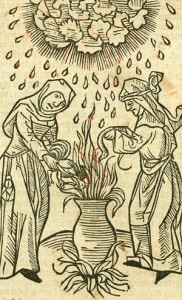
As the shops are filled with witches, ghosts, vampires and monsters for Halloween, I thought it was only right and proper to write an article about witchcraft in Tudor and Stuart times, after all, it was alleged that our very own heroine Anne Boleyn was a witch.
A great article on the UKâs Channel 4 website, entitled âTime Travellerâs Guide to Tudor Englandâ talks about how modern science was in its infancy in the 16th century, as was medicine, and it was natural for people to rely on old-fashioned beliefs and astrology to explain the world and to use potions, charms, amulets and horoscopes to cure ills, for protection and to deal with problems. This article gives an example of a common belief at the time â that toothache was caused by little worms! It sounds silly to us today but perhaps in centuries to come people will look back and laugh at our beliefs.
What I have found interesting in my research into Tudor times and the famous astrologer, mathematician and genius John Dee, is that religion, astrology and the use of charms went hand in hand in medieval and Tudor times. As the Channel 4 article says: âOny the strictest Puritans make a clear distinction between the two [religion and the spirit world]â. It was common for monarchs to consult astrologers to read their nativity charts or to pick auspicious days for events such as coronations or weddings, and for common people to consult âwise menâ or âcunning womenâ about health problems, money problems or marital problems. It all seems very weird looking back on it with our twenty-first century eyes but who are we to judge. Do you consult your horoscope? Do you have a lucky mascot or charm?
White Magic
People who practised white magic were known as âwise men âor âcunning womenâ and their job was to help people. It was believed that the seventh son of a seventh son would be a white witch and things like slight physical blemishes or deformities were signs of having âthe giftâ.
The Channel 4 article gives historical examples of white magic being used:-
- Adam Squire, the master of Balliol College (1571-1580), would sell gamblers a âfamiliarâ (a spirit or âflyâ) to give them luck at playing dice.
- A cunning woman being sent for by churchwardens in Thatcham, Berkshire, in 1583 to find the thief who stole the communion cloth from the church.
- Thomas Rossâs book âNatural and Artificial Conclusionsâ (1567) teaching people how to walk on water.
- Prophecies â Elizabeth Barton, the Holy Maid of Kent (or Nun of Kent), prophesying that Henry VIII would meet disaster if he divorced Catherine of Aragon. Barton was allarently visited by the Virgin Mary who gave her this prophecy but the Virgin mary could not save her for being hanged at Tyburn for treason for speaking out against the King.
Charms
Charms could be purchased from wise men or women to ward off evil, to bring good luck, to cure illness, to prevent drunkenness, to find lost property, to get rid of vermin, to get children to sleep, to make someone fall in love with you, to determine the sex of a baby, to put out fires and all other manner of things. They were part of everyday life and not seen as evil or incompatible with religion.
One such charm was the Tudor âangelâ coin. This coin was originally issued by Edward IV in the 1460s and featured on their face the Archangel St Michael trampling on a dragonâs head. These coins were seen as powerful charms which could ward off evil spirits and bad luck.
Witches and Witchcraft
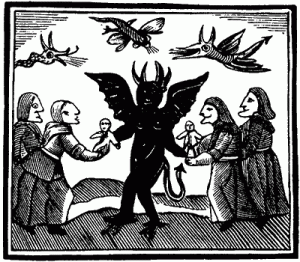
The people of the Tudor and Stuart era were not against using charms and believing superstitions but they did fear witches and witchcraft. The Channel 4 article quotes George Gifford, a preacher from Essex, who said:
âIf there were no witches, there should be no plaguesâ
showing that people of the time blamed natural disasters on witches and witchcraft, and they thought that they could prevent such disasters if they got got rid of people thought to be witches. We know that Henry VIII talked about being bewitched by Anne Boleyn, although he probably did not mean it literally, and she was accused of incest, a sin that was linked to witchcraft. Her enemies sought to blacken her name by spreading rumours that she had a sixth finger and a wen on her neck, physical blemishes that could be signs of a witch, and said that she had a deformed baby and cast a spell over the King, causing his obsession with her and his impotence problems. It all sounds ludicrous but in a superstitious age these stories could have been believed.
According to âWitches and Witchcraft in the Medieval Worldâ, concerns over witchcraft grew in the 1540s and Henry VIII went as far as to pass an Act against it, making witchcraft punishable by death. This act was repealed a few years later, but further acts were passed in 1563 and 1604. These acts led to widespread fear and paranoia, witch hunts and many innocent and gifted women being accused of witchcraft and even being hanged. An article on wikipedia on witchcraft tals of three varieties of âwitchâ, as described by Ăva PĂłcs:-
- The âneighbourhood witchâ or âsocial witchâ â This label covers a person who would curse their neighbour after an argument.
- The âsorcererâ or âmagicalâ witch â This label covers healers, seers, sorcerers and even midwives, or anyone thought to use magic to increase their fortune to the detriment of their community.
- The ânightâ or âsupernaturalâ witch â A person who appears as a demon in visions or dreams.
As you can see from those definitions, it would be very easy for a person to be labelled as a witch because of arguments, tensions in villages and neighbourhoods or their skills at healing or in helping women with childbirth. Many articles on witchcraft in the Tudor and Stuart eras make the point that many of the accused were old women who were poor and lived by themselves. If they fell out with their neighbour, shouted a curse at them in the heat of the moment and then that neighbour suffered some kind of ill fortune then the woman could be accused of causing the ill fortune or accident by her curse, by witchcraft. How sad!
Statistics
More than 90% of those accused of witchcraft between 1450 and 1750 were women and this is probably because they were seen as weaker and therefore more willing to do the Devilâs work. Women were also seen as temptresses and perhaps this harkens back to The Fall of Man, the original sin where Eve sinned and then caused Adam to sin also.
So, how many people were tried and executed for witchcraft in England?
This is hard to answer. Here are some statistics from different sources:-
- The Channel 4 article states in Essex in the 1580s 13% of assize trials were for witchcraft and that out of 64 people accused of witchcraft 53 were found guilty.
- In an article entitled âWomen in Tudor and Stuart Timesâ, Scribd states that 3000 women were officially tried for witchcraft in England between 1563 and 1700 and out of those 400 were hanged.
- âWitches and Witchcraft in the Medieval Worldâ states that there were 785 cases involving 474 witches tried by the Home Circuit (assizes in Essex, Hertfordshire, Kent, Surrey and Sussex) between 1558 and 1709. Only 104 were hanged but 209 were convicted. However, this article points out that figures only take into account formal trials and does not take into account action taken against people thought to be witches by their local communities.
- âWitch Trials in Early Modern Europeâ cites statistics from Ronald Hutton, author of âPagan Religions of the Ancient British Islesâ and states that over a 250 year period 228 executions for witchcraft were recorded but it is thought that the actual figure could be anywhere between 300 and 1,000.
Why the Witch Hunts and Paranoia?
In my research on witches and witchcraft it became obvious to me that allegations of witchcraft could be used by the church to control or get rid of people whose beliefs did not fit in with accepted religious beliefs, by communities to get rid of people who were causing arguments and conflicts, or by husbands to rid themselves of annoying wives. I suspect that such allegations were also caused by fear of the unknown, such as the skills of midwives and herbalists, and the need to blame someone and something for accidents and disasters. It is sad to think that many innocent free thinking women and skilled practitioners were labelled as witches and imprisoned or hanged.
The Pendle Witches
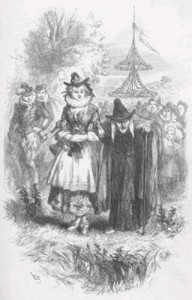
The Pendle Witches or Lancashire Witches are the most famous witches in British history. Ten of the thirteen witches were hanged in 1612 at Lancaster gaol after having been found guilty of witchcraft. It was alleged that the thirteen witches had caused the deaths of around seventeen people in the Forest of Pendle area by using witchcraft and that they got the power to kill and harm by selling their souls to âfamiliarsâ. The âwitchesâ were accused of causing death to their victims by making effigies known as âpictures of clayâ which they then crumbled or burned over a period of time.
The thirteen âwitchesâ were Alizon Device, Elizabeth Device, James Device, Anne Whittle (alias Chattox), Anne Redferne, Alice Nutter, Katherine Hewitt, John Bulcock, Jane Bulcock, Isobel Robey, Elizabeth Southerns (alias Demdike), Jennet Preston and Margaret Pearson. Pearson was found guilty of witchcraft but not murder and so was given a one year prison sentence, Preston was hanged at York because she lived in Yorkshire and Southerns died in prison before the trial. The remaining ten were hanged at Lancaster.
You can find out more about their story at http://www.pendlewitches.co.uk/.
Sources and Further Reading
- âWomen in Tudor and Stuart Timesâ â Scribd
- The Medieval World â Court Depositions in 16th Century English Witch Trials
- âTime Travellerâs Guide to Tudor Englandâ â Channel 4
- Wikipedia article âWitchcraftâ
- âWitch Trials in Early Modern Europe â Wikipedia
Thanks for the great article! I learned so much! I had never heard of the Pendle Witches. Iâm from the US, so I havenât really learned all that much about European witchcraft practices/accusations from the Tudor times. We usually just learn about the Salem Witch Trials. I enjoyed reading this.
Great article. It may seem like belief in witchcraft is a quaint relic of the past, but it (or rather paranoia about it) is still a problem today, especially in Africa. Children are being accused every day of witchcraft by pastors of local churches, and the âexorcismsâ they are subjected to involve torture. Itâs scary stuff that can probably be alleviated with better education.
Also, you can buy charms and amulets on ebay (yes, I look at this stuff but only for a laugh, really!) that are supposed to achieve certain purposes or even be haunted by a spirit of some sort. So we really havenât come very far as a society past belief in superstition and witchcraft.
Finally, I recommend the book The Wise Woman by Phillippa Gregory to anyone interested in witchcraft in Tudor times. Actually, itâs not the best book, and we fans of Anne Boleyn will spot a ton of historical inaccuracies, but itâs satisfying and kinda of stays with you. Itâs a fictional account of a witch or wise woman in the 1530s. Gregory wrote the book before The Other Boleyn Girl, and you can see that the idea for TOBG was already swirling around in her head in The Wise Woman.
Happy Halloween everyone!
Very true, Melissa, I read a book years ago by Audrey Harper, âDance with the Devilâ, about her life as a witch in Surrey, England and how she turned away from it to Christianity. It was very disturbing what she went through and what her coven did. Also one of my ex pastors in the UK had been a pastor in an area where there was a very active coven and had a lot of problems with them when he spoke out against witchcraft. I guess we like to think of witchcraft as something that was prevalent in the past and not part of todayâs modern world but itâs just not true. However, Iâm glad to say that we have moved on from calling midwives and natural practitioners witches!
I havenât read The Wise Woman, Iâll add it to my ever growing list!
Thanks, Carrie for your comment, I donât know much about the Salem Witch trials although I have heard of them. Iâm glad you enjoyed the article.
Hi Claire!
A fascinating article as always!
Thank you, Marge!
Great article! Iâm glad herbal medicine is not considered witchcraft now. When it comes to the supernatural, well, I am not saying yes or no. I just donât want to meddle with things I donât totally understand. I guess being afraid of the unknown may be part of it. The Salem witch trials is a really sad part of U.S. history. A slave named Titiuba probably showed some girls witchcraft and they overreacted to put it mildly and developed fainting, seizures, and other symptoms. The girls blamed unpopular neighbors (back to old women with cats) and the went on to blame more prominent citizens. Many women were killed and one man. Later on, one of the girls admitted to lying and the hysteria died down. The court admitted spectral evidence during the trials, thatâs how out of hand it got. This is a very brief overview of the event.
We look back at medieval âmedicineâ and cringe and think âhow far we have come!â How many years into the future will people look back at our medical practices, such as chemotherapy, radiation, massive surgeries and say the same thing!?
Excellent articleâone of the best!
Very intreresting article about the witches in Tudor times, have also studied the burning times and Matthew Hopkins.
PS: Iâm also a wiccan witch with an Alsation dog for a familiar.
Even today witchcraft is seen as something stupid and dangerous by most people, thank to prejudices but to the attitudes if some witches, like the one your pastor met, Claire. In the real Wicca, you musnât harm anybody, but there are black magie adepts and satanist who give âgoodâ witches bad reputation. It was probably the same thing at the time. the other point was to get rid of women with knowledge and social independance of course!
A fair and balanced summary on an immensely challenging subject for modern folk to come to terms with. And of course it would be wrong to imagine that even in our own âenlightenedâ times we have totally banished all the illogical parts of ourselves. We havenât.
It is through contemplating areas such as this, and the questions that are inevitably raised, that we are able to reach a little deeper into our own make up as individuals â our fears and our fantasies and how these motivate our more rational parts and help us to understand why we believe the things we believe â at any time in history.
youâre a wiccan Aura? Iâd really like to become one too, feeling affinities with all the aspects of Wicca; but I really donât know how to get âinitiatedâ. I try to live following wiccan rules, celebrating esbats and sabbaths, but itâs hard to become and be wiccan in France. Thereâs few websites and books, and itâs not well known. Even when I wanted to buy an athame in a shop of esoterism, they didnât know what it was! For the majority, we are silly people having sex outdoor and making strange things naked; and when I talk of the link with witchcraft, I become the target of jokes.
I have been reading this, and I find it very interesting. It helps with my school work. đ
(also, I would like to become a young wiccan ;p ;D)
Thank you for asknowledging my reply. I thought Iâd take a look at the material that you are showing and get off fast,. It is no way. You have captured my interests. I will have to get back on later. Thanks again. Renee Smeaton-Woolsey- Burgess.
I am English by birth but moved first to Canada at age 10, then the U.S. in my early teens. My mom told me about white witches as a child and I never thought badly about so called witchcraft. I have always had a strong belief in the power of the universe, and no, I am not a nut, but, I have practised white witchcraft. An examlple of that would be getting rid of a wart for someone. It works and there is no evil involved, in fact a white witch would never use witchcraft for bad, ever. My point was that many Americans still harbor prejudices about witchcraft and I would never speak of it unless I am sure the person is open minded and not mixing up witchcraft with Satanism. Many people think the two are interchangable. I read Tarot and always say a prayer to God first and ask Him to quide me. We are so enlightened now, but even so many poeple would fit in well in the Salem of old.
I know absolutely nothing about witchcraft, apart from watching Charmed lol!! So I cannot comment and I would not like to judge anyone for their beliefs. I do think people are quick to judge and do so before they have bothered to find out anything about what the other person believes. I canât say that I have ever dabbled in witchcraft, white or otherwise, and I donât believe in things like tarot, but I believe in a God I canât see, say my prayers and have a strong faith, which some people think is weird.
Claire,Back in the days of witches,the people thought they truely were,not so when the English came to the new world,they planted rye to make bread,the rye molded and not knowing it was molded and started to hallucinnate,when eating the rye bread.They then were tried being witches,buy drownding if they live they were not witches,if they died ,also they were hung same thing,if you lived were not ,if died you were a witch.This began in Salem when the settlers came to the new world, they really didânt know about mold,sadly many people,came to there death and were not witches ,eather way you were doomed, as all did die . Baroness x
Thankyou very much for lots of good information -my history teacher wanted me to reseach witches and witchcraft but I couldnât find any good information anywhere, except on this website -so thanks again, Iâve learnt a load. đ
WEll, though this was last yearâs article, Iâll still chime in. Very interesting! I do think people did not see much that they could explain and witchcraft became part of the explanaton. I expect maybe it had its roots in the pre-Christian religion maybe? Anyway, itâs fascinating!
great stuff, very facinating! loving it. helped a lot for my project!
Brilliant article really helped with my homework!
đ
lol
If you want an academic read relating to English Witchcraft then look no further than James Sharpe âWitchcraft in Early Modern Englandâ also Diane Purkiss, Alan McFarlane and Keith Thomas, Malcolm Gaskill have produced some seminal work.
Malleus Maleficarum was a pamphlet produced in the 15th century by the Catholic Church which made direct reference to witchcraft and the Book of Job which states âThou shall not suffer a witch to live.â This was used an referenced particularly in Europe as a way to ounish believed witches.
Similarly in relation to the gender roles within witchcraft, have a look at cases of demonic possession particularly in relation to the Lancashire witch trials of a male witch.
Hope this provides some extra historical information in line with this article you have produced! I did my dissertation on gender discourses in cases of demonic possession in early modern England.
This is a great point of reference, thanks very much!
Claire â great article.
Also recommended for this topic, though itâs a trifle later than Henry VIII, is James A Sharpeâs âThe bewitching of Anne Gunterâ. It throws a whole new light on period practice of âthe evil handâ, social pressure and witchcraft accusations. Absolutely chilling when one thinks on to the Pendle Witches, The Northern coven, and definitely on Salem. Other books you might enjoy on the topic include the seminal â Witchcraft in Tudor and Stuart England: A Regional and Comparative Studyâ by Alan MacFarlane, âThe Witches of Warboysâ by Philip C. Almond (Elizabethan), Sharpeâs âInstruments of Darknessâ, and Godbeerâs âEscaping Salemâ.
Haunting reading for a Happy Halloween.
Thanks for another great article, Claire.
Iâm glad to say that in Wales, there are barely any records of arrests for witchcraft and I donât think any were ever burned. Maybe the very stong tradition of herbal medicine militated against it!
Claire,Great rersearch on witches lests not for get worelocks to back 500 year,was a geat read!Wish we could of had a halloween contest , maybe next year? Happy Hollos was really the feast of the the good harvest,the people sellbrated the harvest of the food before winter set in. Dressed to keep the evils away and,I highly dout it poor, Queen Anne was not a witch anymore then the King was a worelock,or maybe he was?Good to here from AB Friends and most of all Claire. THX Baroness.x
Fascinating. Some wh came to America during that period brought those beliefs with them. We canât forget the Salem Trials.
Just another thought,they called Mid Evil that for a reason because of there beliefs.Back in the days you could be acused of just about anything and be burned or beheaded,the dark ages,mid evil gets its name for a reason. THX.
Great article as ever!
Great article! Really helped with a history project!
I really recommend Witchborn because it is about witchcraft and witches and it explores the areas like Elizabethâs illegitimate daughter and witch hunts.