 As I said in my post “Henry VIII Falls in Love with Anne Boleyn”, Eric Ives gives a very useful chronology of Anne and Henry’s relationship, from Shrovetide 1526 to August 1527 when it was decided that Henry should ask the Pope for a dispensation to allow him to marry Anne when he had already had carnal relations with her sister, Mary Boleyn.
But Henry and Anne did not marry until January 1533 so what happened in the intervening five and a half years? Well, here’s a chronology from February 1528 until 1533:-
1528 – The King’s Great Matter
- February 1528 – Stephen Gardiner is sent to Rome with Edward Fox to argue “The King’s Great Matter”.
- June 1528 – Anne goes into quarantine at Hever when one of her ladies is taken ill with sweating sickness. Anne becomes ill but survives.
- September 1528 – Due to Cardinal Campeggio’s imminent arrival for the Legatine Court, Henry sends Anne Boleyn to Hever and continues to live with Catherine of Aragon. Henry even had the gall to announce to the court, judges and citizens on the 8th November 1528 that he was only questioning his marriage because he had been told by “diverse great clerks” that it was “directly against God’s law and his precept” and that “if it be adiudged by J law of God that she [Catherine] is my lawfull wife, there was neuer thyng more pleasaunt nor more acceptable to me in my lifebothe for the discharge & cleryng of rny conscience & also for the good qualities and condicions the which I know to be in her… so that if I were to mary againe if the mariage might be good I would surely chose her aboue all other women.”1
- 8th October 1528 – Arrival of Cardinal Campeggio, the Papal Legate.
- November 1528 – Mendoza reports “The lady who is the cause of this King’s misconduct (desorden), perceiving that her marriage, which she considered as certain, is being put off, begins to suspect that the Cardinal of England is preventing it as much as he can, from fear of losing his power the moment she becomes Queen [of England]. This suspicion [of the lady] has been the cause of her forming an alliance with her father [Viscount Rochford], and with the two Dukes of Norfolk and Suffolk, to try and see whether they can conjointly ruin (desbaratar) the Cardinal. Hitherto they seem to have made no impression on the King, save that the Cardinal is no longer received at Court as graciously as before, and that now and then King Henry has uttered certain angry words respecting him.”2
- 9th December 1528 – Du Bellay reports “Mademoiselle de Boulan is at last come thither, and the King has lodged her in a very fine lodging, which he has prepared for her close by his own. Greater court is now paid to her every day than has been to the Queen for a long time. I see they mean to accustom the people by degrees to endure her, so that when the great blow comes it may not be thought strange.”3
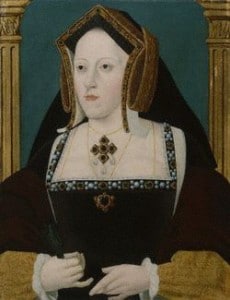
1529 – The Fight for Annulment
- 1529 – Anne Boleyn acquires a copy of William Tyndale’s “The Obedience of the Christian Man and How Christian Rulers Ought to Govern” and later draws Henry’s attention to passages regarding the idea that a ruler is accountable to God alone and that the Church should not control a monarch.
- 31st May 1529 – Opening of the Legatine Court at Blackfriars.
- 21st June 1529 – Catherine of Aragon gives her impassioned speech at the court.
- July 1529 – Cardinal Campeggio adjourns the court for the summer. It never sits again because Catherine is successful in appealing to Rome.
- 1st September 1529 – Chapuys reports “The King’s affection for La Bolaing (Boleyn) increases daily. It is so great just now that it can hardly be greater; such is the intimacy and familiarity in which they live at present. May God remedy it all!”4
- 7th October 1529 – Letter from Pope Clement VII to Henry VIII “Has suspended his cause. Assures him that the dispensation was a positive and not a divine law; and if the Queen, as she affirms, was not known by prince Arthur, there is no doubt that the dispensation was perfectly sound in foro conscientiæ. Begs him to consider the danger in which Christendom stands from the Turks, and how much it is enhanced by this dispute. Rome, 7 Oct. 1529.”5
- 9th October 1529 – Cardinal Wolsey charged with praemunire.6
- St Andrews Day (30th November) 1529 – Catherine confronts Henry saying “that she had long been suffering the pains of Purgatory on earth, and that she was very badly treated”. Henry replies, saying that “she ought to know that he was not her legitimate husband, as innumerable doctors and canonists, all men of honour and probity, and even his own almoner, Doctor Lee, who had once known her in Spain, were ready to maintain” and that “should not the Pope, in conformity with the above opinions so expressed, declare their marriage null and void, then in that case he (the King) would denounce the Pope as a heretic, and marry whom he pleased.”7
- 8th December 1529 – Thomas Boleyn is given the titles Earl of Ormonde and Earl of Wiltshire.8
- 13th December 1529 – Chapuys reports that the King “gave a grand fête in this city, to which several ladies of the Court were invited (among them queen Blanche and the two duchesses of Norfolk, the dowager and the young one), the Lady Anne taking precedence of them all, and being made to sit by the King’s side, occupying the very place allotted to a crowned queen”9.
- Christmas 1529 – Henry celebrates Christmas at Greenwich with Catherine.
1530 – The Fall of Wolsey and the Rise of Anne Boleyn
- January 1530 – Thomas Boleyn is made Lord Privy Seal10.
- 6th February 1530 – Chapuys reports “The Queen is treated as badly and even worse than ever. The King avoids her company as much as he can. He is always here with the Lady, whilst the Queen is at Richmond. He has never been half so long without visiting her as he is at present, giving as an excuse or pretence that some one has died of the plague near her residence. He has also resumed his attempts to persuade her to become a nun; this, however, is but a delusion and loss of time, for the Queen will never condescend to consent to it.”11.
- 12th February 1530 – Wolsey is pardoned and restored to favour.
- 12th June 1530 – Chapuys reports a meeting where “it was asked why the King should not (having obtained the opinion of so many competent judges on this matter) marry at once, without awaiting any further approval of his conduct, especially as he had cause to be suspicious of the Pope”12, an idea put forward by Cranmer.
- June 1530 – Henry is given the Collectanea satis copiosa, a set of papers consisting of “scriptural, patristic and historical arguments which demonstrated – or claimed to demonstrate – that there was no warrant for the centuries-old assumption that the pope was supreme in spiritual matters. Henry would therefore be justified in taking into his own hands the solution of his matrimonial problem.”13
- October 1530 – A papal edict is sent to Henry ordering him to return to Catherine.
- 15th October 1530 – Chapuys reports that Henry “called together the clergy and lawyers of this country to ascertain whether in virtue of the privileges possessed by this kingdom, Parliament could and would enact that notwithstanding the Pope’s prohibition, this cause of the divorce be decided by the archbishop of Canterbury”14.
- 4th November 1530 – Arrest of Cardinal Wolsey.
- 29th November 1530 – Death of Wolsey – Wolsey was travelling to London to answer charges of treason.
1531 – The Supreme Head of the Church
- 5th January 1531 – Pope Clement VII forbids Henry VIII to remarry and threatens him with excommunication if he does
- 7th February 1531 – Convocation ordered to recognise Henry as “sole protector and supreme head of the English church and clergy”15. The resulting “haggling” results in Thomas Cromwell adding the phrase “so far as the law of Christ allows”.
- 11th February 1531 – Convocation granted Henry VIII the title of “singular protector, supreme lord, and even, so far as the law of Christ allows, supreme head of the English church and clergy”.
- 1531 – Henry’s plan of marrying Anne is met by hostility from Nicholas Carewe, the Duke of Suffolk, the Duchess of Norfolk, Bishop Fisher, Reginald Pole, Elizabeth Barton (“the Nun of Kent” and many others.
- Spring 1531 – Renovations begin at York Place where Anne is being lodged.
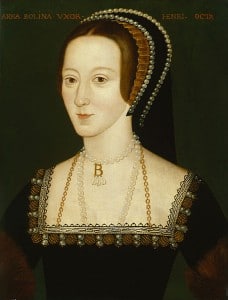
1532 – A Queen in All But Name
- New Year 1532 – Anne and Henry exchange gifts (a set of boars spears for Henry and a set of hangings for Anne) while Henry forbids courtiers to give gifts to Catherine. Catherine sends Henry a gold cup but Henry sends it back to her after an outburst from Anne.16
- June 1532 – Thomas More resigns as Lord Chancellor and is replaced by Thomas Audley, who becomes Lord Chancellor on 26th January 1533.
- July 1532 – Chapuys reports “The King, either hearing from Rome or expecting that the Pope will decree censures to cause him to take back the Queen and banish the Lady, has said publicly, and in great anger, that he would not allow the Pope to treat him as he had done, that the Pope had no power over him; he was resolved to celebrate this marriage in the most solemn manner possible, and the necessary preparations must be made.”17
- 1st September 1532 – Anne is made Marquis of Pembroke
- September 1532 – Work starts on refurbishing the royal lodgings in the Tower of London in preparation for Anne’s coronation.18
- 1st October 1532 – Chapuys reports Henry stripping Catherine of her jewels so that he can give them to Anne.
- 11th October 1532 – Anne and Henry leave England for France where she is treated like his queen.
- 12th November 1532 – Anne and Henry leave France for England. Sometime during their trip, either in France or in Dover, they consummate their relationship.
- 14th November 1532, St Erkenwald’s Day – Henry and Anne arrive at Dover and, according to Edward Hall, marry secretly19.
1533 – Anne Becomes Queen
- 25th January 1533 – Henry VIII and Anne Boleyn marry in a secret ceremony.
- February 1533 – Anne talks of a craving for apples, she is pregnant.
- March 1533 – Henry’s court preachers proclaim the “virtues and secret merits” of Anne Boleyn while proclaiming that his marriage to Catherine is invalid.20
- 26th March 1533 – Convocation is asked to pronounce on the validity of a papal dispensation allowing a man to marry his brother’s widow.
- 30th March 1533 – Thomas Cranmer is consecrated as Archbishop of Canterbury.
- End of March 1533 – Anne’s royal household is formed.
- 5th April 1533 – On the 5th April 1533, Convocation determined “1, that the Pope has no power of dispensing in case of a marriage where the brother’s widow has been cognita. The house consisted of 66 theologians. The proxies were 197 ; the negatives 19. The second question was, whether Katharine was cognita. The numbers present, 44 ; one holding the proxies of three bishops. Decided in the affirmative against five or six negatives.”
- 9th April 1533 – Catherine of Aragon is informed that she has been demoted from Queen to Dowager Princess of Wales.
- 11th April 1533, Good Friday – Archbishop Cranmer writes to the King asking for his permission “to determine his great cause of matrimony” and Henry VIII informs his Council that Anne is his rightful wife and Queen and that she should be accorded with royal honours.
- 12th April 1533 – Henry VIII replies to Cranmer, giving him “licence”, and Anne Boleyn attends Mass as Queen.
- 10th May 1533 – Archbishop Cranmer opens a special trial into the annulment proceedings at Dunstable Priory.
- 23rd May 1533 – The Dunstable trial declares that Henry VIII’s marriage to Catherine of Aragon has been annulled.
- 28th May 1533 – Archbishop Cranmer proclaims the validity of Henry VIII’s marriage to Anne Boleyn after a special enquiry at Lambeth Palace.
- 29th May 1533 – Anne Boleyn’s coronation pageantry begins.
- 30th May 1533 – 18 Knights of the Bath are created.
- 31st May 1533 – Anne Boleyn’s coronation procession.
- 1st June 1533 – Anne is crowned Queen after three days of pageantry, processions and celebrations.
- 26th August 1533 – Anne goes into confinement for the birth of her baby.
- 7th September 1533 – Princess Elizabeth, the future Elizabeth I, is born.
Notes and Sources
- Hall’s Chronicle, p754 and 755
- Calendar of State Papers, Spain, Volume 3 Part 2: 1527-1529 (1877), p885
- LP iv.5016
- Calendar of State Papers, Spain, Volume 4 Part 1: Henry VIII, 1529-1530, pp. 188-203
- LP iv. 5994
- LP iv.6000
- Calendar of State Papers, Spain, Volume 4 Part 1: Henry VIII, 1529-1530, pp. 337-363.
- LP iv. 6083
- Calendar of State Papers, Spain, Volume 4 Part 1: Henry VIII, 1529-1530 (1879), pp. 363-374.
- LP iv.6154
- Calendar of State Papers, Spain, Volume 4 Part 1: Henry VIII, 1529-1530, pp. 444-457.
- Calendar of State Papers, Spain, Volume 4 Part 1: Henry VIII, 1529-1530, pp. 585-604.
- The Life and Death of Anne Boleyn, Eric Ives, p135-136
- Calendar of State Papers, Spain, Volume 4 Part 1: Henry VIII, 1529-1530, pp. 753-766.
- Ives, p138 quoting Guy in English Historical Review, 97.
- Ives, p149.
- LP v.1202
- LP v.1307
- Hall’s Chronicle, p794
- Ives, p164
How many events happened during these years!! And sometimes it must have seemed impossible that Henry could get his divorce with all these obstacles in his way. No wonder Anne is known as perseverant..
I think that the fight for their marriage brought Henry and Anne even closer, they had a common goal and they had to “beat” so many enemies together.
Thank you for this timeline, Claire!
Yes, it was a huge disappointment to Anne and Henry when the Legatine Court adjourned without ruling in Henry’s favour. I don’t think either of them realised how hard the process would be.
Thank you, Claire, for such a detailed report, it’s really useful. I was just wondering how Henry resisted so long without consummating his relationship with Anne. It’s amazing how she succeded to submit him spiritually for about 5 years or so and make him respect her even more, as his desire grew in intensity. I am afraid this is hardly possible in our days. Women succumb really quickly and subsequently lose the respect of some men.
G W Bernard actually believes that it was Henry who refused to sleep with Anne, rather than the other way round, because he wanted to make sure that any babies resulting from the relationship were legitimate. I’m not so sure, I’m sure he could have legalised them later anyway, I think it was Anne’s decision. Anne had seen what had happened to her sister’s reputation, she was a religious person and I think she value herself and her virtue.
I think it’s still possible these days but is a lot harder.
Thanks Claire for this timeline–really is amazing to think so much happened yet it took so long. I guess one of the things in this universal story of man dumping older wife for new one always hits me in two (at least) ways: first, I am sorry for the discarded wife who keeps her dignity and fights for her marriage (being of the older sort of wife myself!) second, I admire the heck out of Anne, how she kept Henry at bay for such a long time and how she played it. I don’t think she schemed but she did have to play the game–she must have been quite marvelous. But then, nothing enhances a woman’s desirability as much as simply being desired! Two very different but very courageous women.
I really feel for Catherine too, Anne, because she just did not deserve the treatment she got. As someone who has seen friends’ marriages finish because of affairs it is hard to think about what Anne and Henry did to Catherine when she had tried so hard to give Henry what he wanted, a son. At the end of the day, I think we have to lay the blame on Henry. Anne rebuffed him and left court and he pursued her, I’m not sure that she could refuse his advances and I think she just did the best she could do in refusing to be his mistress. Some people say “well, she could have just been his mistress so that Catherine would not have been abandoned” but Henry was looking to annul his marriage anyway so he would have looked for another wife regardless, we can’t blame Anne for protecting her virtue.
I admire both Anne and Catherine, such incredibly strong women who both fought for what they believed in.
Thank you so much for all of the time and effort you put into your research. I absolutely love Anne Boleyn. She possessed so many qualities of a strong woman, and was simply ahead of her time. Had it not been for people sticking their noses where they did not belong, I’ve no doubt that King Henry and Queen Anne would have been eternally happy and would have produced many more children.
Thank you, Toni. If only Anne had had a son!
Thank you! Thank you!
But, what about the years from September 1533 to 19 May 1536? Coming soon?
Mariella
Yes, Mariella, don’t worry, I will be looking at their marriage too.
Stela, Yes it is possible to wait for marriage if you believe it is the right thing to do no matter what age you are. There is a song that says “if you like it then you should put a ring on it”, a somewhat silly way of saying that love comes before marriage and sex. From the friends I have known, living together is no indication of a successful marriage. And yes, I am not about to “go all the way” unless I am certain of commitment and love. I think Anne was wise in not wanting to be a mistress.
I think there is so much pressure in this day and age to “go all the way” and it’s seem as the norm but it is so much more special when you wait for the right person.
Claire, That’s exactly what I mean. i think too many people enter into a relationship without first really knowing one another. And it does take time to really know someone.
Claire, informative timeline, thanks…I just had a thought, that we may have never heard of Anne Bolelyn if Henry and Catherine had had a male child (which lived long enough).
Do you think Henry and Catherine would have stayed married for the long haul if he wasn’t so obsessed with getting a male heir? He probably wasn’t such a cold, selfish person at first but became that way after time, from what we have seen.
Hey Claire,
Wow! This has been really helpful, as I’m attempting to write a fiction book on Anne. Got a LONG way to go, but looking forward to the second half 🙂
Hope you have a Fab christmas, looking forward to finally getting to order stuff real soon.
xxx
Who was Queen Blanche?
In other records, e.g. the letter from Sebastian Giustinian, the Venetian Amabassador to the Council of Ten in 1516, Mary Tudor, sister of Henry VIII and Queen of France, is referred to as “Blanche”. LP viii. Vol 2. 1380 ” He said that Henry demanded his sister should be restored, Albany be removed, and that Blanche [Q. Mary] should receive the jewels that Louis gave her for personal ornament. London, 2 Jan. 1516″ Mary is often referred to as “la reine blanche”.
Theres a song by Neyo called “Because of you” I think this describes perfectly the obsession that Henry felt for Anne during this early period.
Just thought i’d add that, ha.
Claire
I am curious. Have you ever done an article in regards to whether you think Catherine of Aragon really was a virgin at the time she married Henry. I just have a hard time believing that one. I mean Arthur by what I have read was fairly health until they both became sick and he died. That was almost six months. I mean unless he was gay, I just have a hard time believing that they never consummated the marriage. What are your thoughts on this?
Who is “Queen Blanche?”
See answer above:
In other records, e.g. the letter from Sebastian Giustinian, the Venetian Amabassador to the Council of Ten in 1516, Mary Tudor, sister of Henry VIII and Queen of France, is referred to as “Blanche”. LP viii. Vol 2. 1380 ” He said that Henry demanded his sister should be restored, Albany be removed, and that Blanche [Q. Mary] should receive the jewels that Louis gave her for personal ornament. London, 2 Jan. 1516″ Mary is often referred to as “la reine blanche”.
I’ve always looked at the triangle of the matter- Catherine, Henry and Anne. Catherine was caught in the web of complete and absolute love and trust in Henry and she never faltered in that. When you love a King you are supposed to firm, steadfast and true in that. To do anything but- well-look at what happened to the other wives who were adulterous. Catherine was very devoted to God, very devoted to her marriage vows- either to Arthur or Henry because it had been bred into her. Anne was bred to be a royal Mistress in place of her sister. Her sister failed where she did not. She kept the attention of a King, rose her family into high places and kept her family in favor so she did exactly as she was told. In the process she lost her heart and her head. In that time- to refuse a King who was adamant about his attention was unheard of. When a King had his eye on you- you listened or you suffered the consequence. If she had refused Henry, not only would she suffer, her family would suffer and it would have been unthinkable. Too many players were in this triangle and thus it was that we would never have been here discussing the intrigue that came out of it. I’ve sat for years looking through the tangled web and tapestry that they created. Catherine was a very sad and lonely woman stuck in a foreign country with enemies surrounding her including the “whore” who wanted her place. My heart felt for her most of all. She did not deserve the treatment she received by her husband or her court. Those who remained loyal to her tried to do their best but when you’re caught at court by a spiteful and childish King- you really can’t do much.
Thanks for the timeline =)
I do think that Henry was shocked and surprised by Catherine’s unwillingness to let go of their marriage. Perhaps, as God’s anointed sovereign, he expected her to do his bidding, I don’t know. He was convinced that their marriage was contrary to God’s law and that Catherine should see that too. I wonder what would have happened if Catherine had accepted things. Would she have had a happier life? Would Mary have had an easier time of it? Would Anne have had chance to give Henry a son? Lots of what-ifs!
I don’t believe that either Mary or Anne were bred to be royal mistresses. Evidence actually suggests that the Boleyns were not happy with Mary’s behaviour and that Thomas Boleyn was not happy with Anne’s relationship with the King. I think Henry was in control and he spotted these sisters at court and wanted them. Obviously Anne was not willing to give him her virginity, I think she knew the value of keeping it and did not want to end up like her sister. It appears that she rebuffed the King until he offered marriage and I believe that he convinced her that his marriage to Catherine was invalid. At that point, Anne then started fighting for the annulment and doing everything she could to marry the King.
I agree with you about Catherine. A sad end to a Spanish princess who truly loved her husband and who was loved by her people.
Thanks for writing this fascinating article, Claire, it really brought home to me just how long the struggle over the divorce went on for and the frustrations on both sides of the argument. Really useful to have it set out in a timeline of events!
I’ve just been dipping into my Warnicke about the ship Mary Boleyn, which could give a better date for the start of Mary’s and Henry’s relationship. She suggests, as I’m sure those better read than I am, do, that it was previously owned by the girls, father Thomas.
Great article, Claire!
Something that caught my attention and puzzled me is: In 1531, why would the Duchess of Norfolk be opposed to the marriage of Henry VIII and Anne Boleyn? This was Agnes Tylney,
wife of Anne’s grandfather, and cousin to Anne’s maternal grandmother. Where is the Howard loyalty?
I dont get it why so many comments are n praise of Anne Bolyn
She was cold an ruthless toward Catherine an. princess Mary
l feel like het fate was KARMA for treacery an disrespect she showed against Oueen Catherinean Princess Mary who both did nothing wrong except be themselves
ANNE BOLYN was a selfish bitch an im glad Henry destroyed her life the same as he did Oueen Catherine an his own chikd Mary
This is my opinion so whoever doesnt agree then u hav your own opinion so dont knock mine
This is SOCIAL MEDIA
I don’t believe that every comment here is in praise of Anne Boleyn, but the aim of this website is to give a balanced view of Anne and her life. I respect that you have your opinion, but if I may briefly disagree. Anne Boleyn did not deserve to be falsely accused of adultery and treason and brutally executed, nobody deserved that. Anne had two sides to her, just as Henry Viii did. First, I don’t believe in Karma, but if you do, then fine, but it actually refers to our next life, not payback in this one. I don’t believe Anne was punished for having a temper or not being kind to Mary or Katherine, plus even if she was a nasty person, that does not make her guilty of the vile and false charges that she and five innocent men were accused of.
Anne did react to the fact that Princess Mary would not call her Queen, because she couldn’t, her mother was Queen. She did say that her governess should box her ears, but it was Henry who allowed this and his own treatment of Mary, his demands that she obey him or else went on after Anne died. It was Henry who was ruthless to Katherine and ordered her moved from place to place, not Anne, even if she did approve, for which there is very little evidence as she hardly ever remarked upon this. Yes, there is evidence that Anne wished Mary and Katherine would die, in a period of extreme emotional stress, but there is no evidence that she made any attempts on their lives.
There is also evidence that Anne was generous and concerned about social as well as religious and moral reform and several letters from ordinary women thanked her for her help. Henry has to take some of the blame for whatever actions or feelings Anne showed or didn’t show towards Katherine or Mary. Again, even if she was a ruthless bitch, which a balanced look at the sources and evidence shows not to be the case, she still didn’t deserve to be set up on false charges and executed just because Henry was fed up with her.
Thanks for the article, very interesting read, i have to say I find it very hard to believe you’re married to someone for 6 mos, and its never consummated. Wasn’t there a protocol about that? I;m just curious
I also want to say I feel really bad for Catherine; that whole situation couldn’t have been easy…