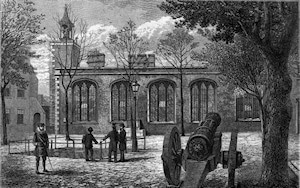
I decided to write this article because there is so much false information out there about the restoration work at St Peter ad Vincula Chapel in the 19th century, the exhumation of Anne Boleyn and various other Tudor remains, and Anne Boleyn’s resting place.
I recently purchased a copy of the 1877 “Notices of the Historic Persons Buried in the Chapel of St Peter ad Vincula in the Tower of London, With an Account of the Discovery of the Supposed Remains of Anne Boleyn” by Doyne C Bell (Secretary to Her Majesty’s Privy Purse), which is a full record of the restorations in 1876 and 1877, including the findings of Dr Frederick J Mouat (professor of medicine) who examined the remains found, so I can tell you exactly what was found in the 19th century and what was done with it.
The Restorations
In his “History of England”, Lord Macaulay said of St Peter ad Vincula:-
“I cannot refrain from expressing my disgust at the barbarous stupidity which has transformed this interesting little church into the likeness of a meeting house in a manufacturing town. In truth there is no sadder spot on earth than this little cemetery. Death is there associated not, as in Westminster and St Paul’s, with genius and virtue, with public veneration and with imperishable renown; not as in our humblest churches and churchyards, with everything that is most endearing in social and domestic charities: but with what ever is darkest in human nature and in human destiny; with the savage triumph of implacable enemies, with the inconstancy, the ingratitude, the cowardice of friends, with all the miseries of fallen greatness and of blighted fame.
“Thither have been carried through successive ages, by the rude hands of gaolers, without one mourner following, the bleeding relics of men, who had been captains of armies, the leaders of parties, the oracles of senates, and the ornaments of courts.”1
And it was the unsightly state of the chapel, along with the need to do repairs for sanitary reasons, which led to Sir Charles Yorke, Constable of the Tower, to submit plans for restoration to Queen Victoria in 1876. The resulting decision was that “the chapel should be, as far as possible, architecturally restored to its original condition, and also suitably arranged as a place of worship for the use of the residents and garrison of the Tower.”2
The proposed restoration work included relaying the pavement, which had sunk over the years, and to install some kind of heating. It was when the pews were removed and the pavement stones lifted in August 1876, that “the resting places of those who had been buried within the walls of the chapel… had been repeatedly and it was feared almost universally desecrated.”3 Due to the fact that the ground needed to be cleared so that proper foundations could be laid for the pavement, it was necessary to remove the remains to the crypt, unless they were in stable vaults. The remains were therefore “carefully collected and enclosed in boxes, with suitable inscriptions; and all the coffins which were found intact were at once removed to the crypt.”4
The Restoration of the Chancel
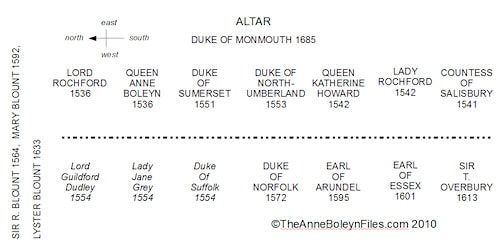
In October 1876 the issue of the chancel came to the forefront. As records showed that the Tudor queens Anne Boleyn and Catherine Howard were buried there, along with the Dukes of Somerset, Northumberland and Monmouth, it had been decided to leave the chancel undisturbed and to just lay the new pavement over the top of the old. However, the Surveyor examined the area and found that the pavement had sunk in two places and there was no other option but to remove it and to replace it with tiles or symmetrical paving so that it would be within keeping with the rest of the chapel.
Doyne C Bell had used historical sources to create a plan of the resting places of the queens and dukes and it was decided that any remains found should be re-interred on the same spot and labelled (see the plan towards the bottom of the page).
The remains of Anne Boleyn

When the pavement was lifted in the area thought to have been the resting place of Anne Boleyn, the bones of a female were found at a depth of about two feet, “not lying in the original order, but which had evidently for some reason or other been heaped together into a smaller space.”5. The bones were then examined by Dr Mouat who confirmed that they belonged to “a female of between twenty-five and thirty years of age, of a delicate frame of body, and who had been of slender and perfect proportions; the forehead and lower jaw were small and especially well formed. The vertebrae were particularly small, especially one joint (the atlas), which was that next to the skull, and they bore witness to the Queen’s ‘lyttel neck’.”6 Although the bones were mixed up, there were no further female remains at that spot. The bones of George Boleyn were not found but it was thought that the ground had been disturbed in the late 18th century and his remains removed then, or that he was buried further towards the north wall, in an area not touched by the restoration work.
Dr Mouat’s Findings
Of the remains of Anne Boleyn, Dr Mouat wrote in a memorandum:-
“The bones found in the place where Queen Anne Boleyn is said to have been buried are certainly those of a female in the prime of life, all perfectly consolidated and symmetrical, and belong to the same person.
“The bones of the head indicate a well-formed round skull, with an intellectual forehead, straight orbital ridge, large eyes, oval face and rather square full chin. The remains of the vertebrae, and the bones of the lower limbs, indicate a well-formed woman of middle height, with a short and slender neck. The ribs show depth and roundness of chest. The hands and feet bones indicate delicate and well-shaped hands and feet, with tapering fingers and a narrow foot.”7
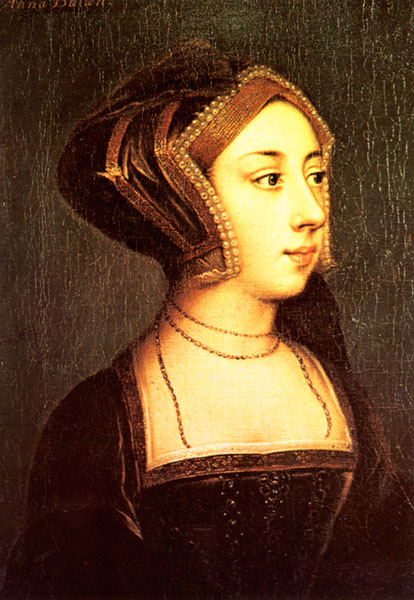
He went on to say that they were consistent with descriptions of Anne and the sitter of the Holbein painting owned by the Earl of Warwick.
Dr Mouat also wrote a detailed report of his examination of the skeleton, in which he noted that Anne was about 5′ – 5’3 inches in height. A careful examination of the finger bones did not show any evidence of a sixth finger or any type of malformation.
Other Remains
Some male bones were found close to the remains of Anne Boleyn and these were examined and found to have belonged to a tall man of around the age of 50. It was thought that they belonged to Protector Somerset (Edward Seymour) who was recorded as being laid in to rest between Anne Boleyn and Catherine Howard in 1551, along with John Dudley, Duke of Northumberland, who was executed in 1553. The bones of another man of about 50 years of age were then found and these were identified as the Duke of Northumberland.

Nearer to the wall of the chancel, in a south-east direction, the bones of two females were found, the first set belonging to a female of 30-40 years of age and the other of an elderly female. The team identified these as belonging to Lady Rochford and Margaret Pole, Countess of Salisbury.
Beneath a stone bearing the name of Sir Allan Apsley, Lieutenant of the Tower, who died in 1630, the bones of a man were found, and then the leg bones of a tall man, identified as the Duke of Monmouth, were found in the expected place, as recorded “under the communion table”. Another large skeleton was found under the Duke of Monmouth’s remains, but these could not be identified.
The remains of Catherine Howard were not found and it was thought that this was due to her youth (young bones are softer and more cartilaginous and so disintegrate more rapidly) and the use of lime in her interment – lime was found in the place thought to have been her grave.
The Duke of Northumberland’s Remains
Dr Mouat recorded that “these bones evidently belonged to a large man, about six feet in height; and aged about 50 years.”8
Margaret Pole’s Remains
Dr Mouat recorded that these bones belonged to “a tall and aged female”9.
Lady Rochford’s Remains
The only notes that were made regarding the remains of Jane Boleyn, Lady Rochford, were that they belonged to a woman of around 40 and were found where expected, next to the supposed grave of Catherine Howard. Lady Rochford was executed on the same day as Catherine.
What Happened to the Remains?
The records of the meeting held on the 13th April 1877 in the Chapel of St Peter ad Vincula, made by Bell, tell us that the remains of the seven people found in the chancel in November 1876 were:-
“soldered up in thick leaden coffers, and then fastened down with copper screws in boxes made of oak plank, one inch in thickness. Each box bore a leaden escutcheon, on which was engraved the name of the person whose supposed remains were thus enclosed, together with the dates of death, and of the year (1877) of the reinterment.
“They were then placed in the respective positions in the chancel in which the remains had been found, and the ground having been opened, they were all buried about four inches below the surface, the earth was then filled in, and concrete immediately spread over them.”10
They were put back in the positions recorded by Bell and were buried with respect.
A memorial tablet of those buried in the chapel was also produced and placed on the wall near the entrance door, where it can still be seem today. It reads:-
List of Remarkable Persons Buried in this Chapel
- Gerald Fitzgerald, Earl of Kildare 1534
- John Fisher, Bishop of Rochester 1535
- Sir Thomas More 1535
- George Boleyn, Viscount Rochford 1536
- Queen Anne Boleyn 1536
- Thomas Cromwell, Earl of Essex 1540
- Margaret of Clarence, Countess of Salisbury 1541
- Queen Katharine Howard 1542
- Jane, Viscountess Rochford 1542
- Thomas, Lord Seymour of Sudeley 1549
- Edward Seymour, Duke of Somerset 1551
- Sir Ralph Vane 1552
- Sir Thomas Arundell 1552
- John Dudley, Duke of Northumberland 1553
- Lord Guildford Dudley 1554
- Lady Jane Grey 1554
- Henry Grey, Duke of Suffolk 1554
- Thomas Howard, Duke of Norfolk 1572
- Sir John Perrott 1592
- Philip, Earl of Arundel 1595
- Robert Devereux, Earl of Essex 1601
- Sir Thomas Overbury 1613
- Thomas, Lord Grey of Wilton 1614
- Sir John Eliot 1632
- William, Viscount Stafford 1680
- Arthur, Earl of Essex 1683
- James, Duke of Monmouth 1685
- George, Lord Jeffreys 1689
- John Rotier 1703
- Edward, Lord Griffin 1710
- William, Marquis of Tullibardine 1746
- William, Earl of Kilmarnock 1746
- Arthur, Lord Balmerino 1746
- Simon, Lord Fraser of Lovat 1747
Bell’s book then goes on to give an account of the arrest, imprisonment, death and burial of each person on this list.
The Scaffold Memorial
In 1866, Queen Victoria commanded that the spot where it was thought that Queen Anne Boleyn and others had been executed should be cordoned off by a railing and a memorial plaque placed there. A brass plate on a stone was inscribed with the following words:-
“Site of the ancient scaffold: on this spot Queen Anne Boleyn was beheaded on the 19th May, 1536.”
Today we have the modern glass memorial which was unveiled in 2006. It was designed by Brian Catling and features two engraved circles with a glass-sculpted pillow at the centre and words etched around the outside of the circle:-
“Gentle visitor pause a while,
Where you stand death cut away death cut away the light of many days.
Here, jeweled names were broken from the vivid thread of life.
May they rest in peace while we walk the generations around their strife and courage,
Under these restless skies.”
Anne Boleyn’s Body?
But did the bones that the Victorians find really belong to Anne Boleyn? I’ll discuss this in my next article “Anne Boleyn’s Body Found?“.
Notes and Sources
- Macaulay’s History of England, Vol. I, pp 628-9, quoted in Notices of the Historic Persons Buried in the Chapel of St Peter ad Vincula in the Tower of London, With an Account of the Discovery of the Supposed Remains of Anne Boleyn” by Doyne C Bell 1877, p8-9
- Bell, p10
- Ibid., p15
- Ibid., p16
- Ibid., p20
- Ibid., p21
- Ibid., p26
- Ibid., p29
- Ibid.
- Ibid., p30
PERFECT article, thank you! It always so nice to have that one article that clears up most everything and you’ve done it. I have been so confused by the various reports of the findings but not anymore. I can’t wait until the follow up article!
I have a couple of questions about the layout of the Chapel though. Am I understanding correctly that the plan above was made before exhuming the bodies by historical sources then they just put them back according to that as well? Also, I’m a little confused because the plan above shows only 13 graves but the list that is on the memorial tablet has 34 names?! Can you elaborate on this a little bit for me.
Hi TeamAnne,
Yes, I hate it when you read online about how the Victorians found a 6th finger – erm, no they didn’t!!
The plan that Doynce C Bell drew up was just a plan of interments in the chancel and not the whole chapel – sorry, I’ll go and edit the picture title to show that and cut down the confusion. Hope that helps.
Yes it gets on my pip as well Claire.. Anne had a fair few supposed defects if we were to believe all the propaganda, having 6 fingers was just one of them. You have no doubt read my post in the forum with one of the other slurs levelled at Anne, the 3 nipples.. Forgive me for being quite candid, but “Horseshit”, Anne had no extra bits at all, I believe that some of these slurs against her were probably instigated by Nippledick Henry, all to try and make himself feel better about her execution.
The Victorians always liked a good scandal and were a macabre lot anyway, so the finding of the 6th finger slur would all add spice to their somewhat boring and medocre humdrum lives.
Tell me about it! I have read so many different things online about it but it’s great you went out and got the actual book!! Ohhh ok, I doubt anyone else was confused. I am just not too familiar with the layout of the Chapel so wasn’t aware of different sections. 🙂
I know, there is a lot of confusion about the Victorian restoration of the chapel. It took me a while to track down the book but I managed to find a copy which has an inscription of someone’s name and the date 1882 written in the most beautiful handwriting. It’s got that wonderful musty smell of old books!
That would be amazing. I am always collecting nostalgia books just for the history in them. I would have loved to have found this book.
Fascinating! THis is really quite amazing and thank you so much for sharing it. I watched Anne of a Thousand Days last night (again!) and think Richard Burton captured so much of Henry’s character–the best I’ve seen. To hear how small she may have been is heart-breaking!
A great article, Claire. How I wish Anne’s remains had of been exhumed in a time when forensic anthropology actually existed. An anthropologist could tell us so much more about the bodies, even if they’d been beheaded, perhaps even with what kind of instrument.
However, at least these findings do present some light on the people buried, and that no sixth finger was found on any remains. I look forward to your next article on the exhumations.
Very interesting. It makes me wonder why they just tossed them in there with no markings whatsoever. But I guess it was better than burning the bodies or throwing them out like trash. So, it sounds like people who were executed as “traitors” were all put in this chapel and it was all done during Tudor times? What was the chapel used for at the time and then afterwards? Just curious. Also, wasn’t certain from your summary here (thanks for that, BTW) if they were in coffins at all or just tossed in. Secondly, why the lime for Katharine Howard? Were they deliberately trying to eliminate all traces of the body?
For some reason, this article makes me very sad. It’s not that I’m not glad you wrote it, but it’s so true about the glittering jewels whose light has gone out.
Thanks so much for all your hard work!
Great post! It clears up a couple of questions I had been pondering.
The Bell book is on Google Books and can be downloaded in its entirety:
http://books.google.com/books?id=aGjSAAAAMAAJ&printsec=frontcover&dq=Historic+Persons+Buried+in+the+Chapel+of+St+Peter+ad+Vincula&source=bl&ots=1q9TupeEce&sig=krrU_tw8J1qzhVkROVGy52cwkrs&hl=en&ei=29p7TI7pBoG0lQfMgMnxCg&sa=X&oi=book_result&ct=result&resnum=1&ved=0CBIQ6AEwAA#v=onepage&q&f=false
Regarding Anne Boleyn: if they are so sure these are the bones of Anne (and the age of the bones sound like it is) then how did that story about Anne being spirited away and buried in Hever (I believe) get started. Could this not be Catherine Howard? Even if Catherine’s bones disintegrated, skulls usually hold up pretty well, and to not find anything left of Catherine Howard is pretty amazing.
Thanks everyone for the comments, I thoroughly enjoyed researching this article. Thanks for the link, Susan.
Gilda, I’ll be discussing whole Catherine Howard/Anne Boleyn/Lady Rochford issue in my next article so keep an eye out for that one. As far as the whole Anne being spirited away story is concerned, there are a few legends out there about Anne’s resting place, see http://www.theanneboleynfiles.com/where-is-anne-boleyn-buried/4891/
A very long ago, I read of the findings in the arrow box. There was an account that, true to contemporary descriptions of this Queen’s slender but long neck, an extra vertebrae was part of her uppermost spine. Can you shed any light on this?
Grazie di questo articolo bello e commovente. In vita e in morte Anne è stata trattata vilmente, ma scalda il cuore vedere che ci sono persone che pensano a lei con affetto, e magari pregano per la sua pace. Anche se non sono molto religiosa, io lo farò.
Grazie.
Mariella
Great article. It brought me to tears
I’m looking forward for the next artcile. I went to the Chapel last March and I was really moved as I looked at the altar. I knew that under it was the final resting place of Anne and so many people who were brutally executed. Such a shame..
Anne and Lady Jane were always my favorites. I Hope Anne haunted H8’s life till he died. He deserved to be haunted for the murder of Anne. Bless your soul and RIP Anne.
fascinating Claire,
Cant wait for the next installment.
That book is a treasure to own.
Paudie.
Another great article Claire!
I wonder if there would be away to use an x-ray machine or something so anthropologists could reconstruct the true looks of the people buried under the alter…that would be amazing!
Wonderful post. Such a sad list of names.
A very sad list and we need to remember that it doesn’t include people who were buried in the churchyard, men like Weston, Brereton, Smeaton and Norris.
I wondered where the men accused with Anne Boleyn were buried. I tried to find out but was knee deep in research for my dissertation for My Masters. That answered, can you visit the cemetery (obviously not at this precise moment with Covid)? I am currently doing my dissertation on the four men accused and where they were at the times they were meant to be copulating with Anne. Trying to find proof they were totally innocent. Proof of three! Smeaton is the last and I think will be very interesting.
What is the Chancel in comparison to the whole chapel?
Gilda, the reason the bones are thought to be Anne’s rather than Katherine’s because in the plan you can see that Katherine was supposed to be three spots over from Anne. The plan was drawn up before digging, and it was done according to historical sources (at least that is what I gather from the article). So, they had a basic idea of where each body should be even before “forensic” identification. Can’t wait to see what Claire says about it in her next article!!!
The chancel is the bit at the front, where the altar is. Here is a proper definition:-
“In architecture, the chancel is the space around the altar at the liturgical east end of a traditional Christian church building. It may terminate in an apse.”
If you visit St Peter’s today, the chancel is the part that’s roped off, the part with the memorial tiles on the floor and the altar table.
Hi Claire
Nice writing! I always love reading your articles.
I do have some questions though.
You say this is a book so it is not the original papers filed?
I have found we cannot always trust what authors write. I was looking into Eric Ives sources and found Hugh Paget’s paper that Ives used to determine the age of Anne Boleyn. Ives turned what Paget had written to fit his thoughts and writings, l as others have done. Also when Paget wrote his paper in the 80s we knew that Anne was not the eldest daughter, but Paget calls Anne “the eldest daughter of Thomas Boleyn”. SO I believe we have to discount Paget’s paper along with many of the modern day authors who have used him as their main source for her birth date.
I am wondering if there is a way to see the original papers written by the examining doctors, just to be sure that what this author has written is the whole truth.
Hi Cindy,
It is a book of the records, more of a collection of the archives and records than a book. It has Dr Mouat’s findings, minutes of all the meetings and who attended, all of the details. So, it is the original papers followed by a biography of each person buried, which obviously is in a book form and based on Bell’s research. Each report begins with the date of the meeting, the list of persons present (with their positions), what was discussed at the meeting, followed by the names of those present confirming that the minutes were accurate. You can read it at the link Susan gave, at http://books.google.com/books?id=aGjSAAAAMAAJ&printsec=frontcover&dq=Historic+Persons+Buried+in+the+Chapel+of+St+Peter+ad+Vincula&source=bl&ots=1q9TupeEce&sig=krrU_tw8J1qzhVkROVGy52cwkrs&hl=en&ei=29p7TI7pBoG0lQfMgMnxCg&sa=X&oi=book_result&ct=result&resnum=1&ved=0CBIQ6AEwAA#v=onepage&q&f=false
Doyne C Bell was Queen Victoria’s “Secretary to Her Majesty’s Privy Purse” and he was the person in charge of recording the restoration work and the findings. Dr Mouat, whose reports are included in the book was a former Professor of Medicine and Medical Jurisprudence and the Local Government Inspector for the restoration.
Riveting stuff, quite honestly! I don’t know if I’m just a sap or what, but I have to say that I derived such peace and relief to see the list of other persons buried in the same chapel. Even though she’s been gone from this earth nearly 500 years now, it’s nice to know that her final “resting” place was that to others as well… and that maybe they weren’t all just haphazardly thrown in there! Thanks for posting, Claire!
Thanks for your definition Claire! That helps me visualize this a lot. 🙂 You recently mentioned the churchyard, where the likes of Norris and Smeaton are laid to rest. I am curious if they have stones marking their graves or were they just buried and that’s that? Also, is the Churchyard close by the Chapel?
Very intersting and well-written article, Claire! I very much enjoyed reading it. I have visited the spot of where Anne Boleyn supposedly lies, and it’s such a humble grave for such a brave lady, whose life was cut down before her time! I have also read various articles that said that when her remains were found, they did find the 6th finger, so glad to see this article states the truth! I have one question though. I wonder why Catherine Howards’ grave was supposedly the only one with lime found in it? I would think that they would all have had lime thrown in, to help the body decay faster. Especially Anne, since Henry wanted to erase every sign that she even existed. Odd that Catherine’s was the only one. Just a thought! 🙂
Wonderful article , there has been so much back and forth on the subject . I am glad to have more information ,can’t wait for the next installment !!!!
TeamAnne,
The churchyard I think was more of a mass grave than a proper churchyard. Alison Weir writes of how it surrounded the chapel and extended into the area which now has the Jewel House and Waterloo Block on it. Apparently in excavation work carried out in 1841 and 1964, remains were found and these were buried in the crypt of the Chapel.
Trish,
I’ll have to have a look in the book to see if lime is mentioned in any of the other graves but it was found at the site where they though Catherine had been buried, not sure why.
I was wondering if there has been any attempt to get permission from the Queen to open the crypts and do modern testing on the remains. This would put to rest such suspicions like the remains of the two little boys found in the tower, being Edward IV’s little princes, and other legends like that.
I know that sometimes people get upset about disturbing the graves of the dead, but I think it would answer many questions and destroy the many myths about the individuals who are buried here.
If they could find the graves of the men accused with Anne in the churchyard, proper interment of these individuals could be given and in addition to modern testing on the remains, they could at last be given headstones to mark their final resting places.
Apparently, Her Majesty and the Church of England will not give permission for these exhumations under any circumstances. Some time ago I was corresponding with the authorities at Winchester Cathedral on the subject of the remains of William Rufus, King Canute and other Saxon kings buried there, whose coffins were desecrated by Cromwell’s soldiers during the English Civil War. All the bones from these tombs – which were flung open and hurled at the stained glass windows to break them, were bundled back into various coffns afterwards, and consequently all the skeletons were mixed up. Despite many appeals for these to be identitified and then reinterred in a respectful manner, HM and the powers that be in the church will not agree – in my view, an appalling situation.
Think of it like this- how would it have been if, after discovering the skeleton of King Richard III in the car park, no tests whatsoever had been permitted by the ‘authorities,’ denying us the fascinating knowledge that came out of this, and the remains, unidentified, had simply been put back where they were found?
The French authorities are more enlightened on this subject. For centuries, arguments raged as to whether the remains interred at Saint Denis really were those of the ‘lost’ eight year old Dauphin, son of Louis XVI and Marie Antoinette, who was imprisoned in the Temple. Tales that he ad escaped, had died an old man on the island of Martinique etc. abounded. But the remains were DNA tested and confirmed to be those of the little Dauphin, solving one of the great mysteries of hiatory.
If such exhumations were done at the Chapel of Ad Vincula in the Tower of London, subjected to careful examination and then reinterred with dignity and honour, I cannot see what possible objection there could be. But what can one exoect from blinkered dinsaurs?
Is there any mention of the arrow chest Anne’s remains had been tossed into? That would be the most distinctive identifier, I would think. It is a pity that Elizabeth had to be so circumspect about her mother, even after she herself became Queen Regnant, and placed Anne in a proper grave, even as James I did for Mary Queen of Scots.
Claire, what a wonderful article. You have done a service to all of us who seek answers to Tudor mysteries.
Jeane Westin, His Last Letter, NAL, August, 2010
As always, an excellent article. I have wanted to have a look at that book for some time – but I don;t have to say how difficult it can be to find a reasonably priced copy! Thank you for making the information that it contains available here through your posts
And were those REALLY the bones of Anne Boleyn? Can’t wait for the next installment of the saga . . .
Mary Ann, I think the task in which you are talking would be too much of a large disruption. That is just my opinion though. It would be different if it were Queen Anne herself (as an example, not trying to get into a debate) because there would only be that one grave disrupted. However, with the crypt or the churchyard you would have to do almost every grave since no one has the slightest idea as to where those people (Smeaton, Norris, etc.) lie. With the Chancel there were records stating where they were laid which helped later in “assumed” identification. I am unsure if records like that exist for the churchyard or crypt?!
Claire
Thank you very much for a very informative and well researched article concerning the burial place of Anne Boleyn. We now have some more information about Anne’s body.
Imagine how very tiny she was. Not much over 5 feet with a very tiny neck. Long slim fingers and toes with very small and slender feet. Anne packed a very powerfull personality into a very small frame. Beautiful oval face and intellectual forehead.
Must have been misleading to have seen her and then gotten to know her. How beatiful she must have been. This helps in when I try to visualize her.
It would be amazing to get permission from the Queen to be able to xray the bones and then do a computer mock up of what Anne looked like. Unfortunately, xray does not penetrate lead so we are left to our imaginations.
As for Kitty Howard – why would they throw lime on her body to destroy it – must have been something that Henry did not want anyone to know about. For example – she was pregnant ??? A another mystery that will never be solved.
I am looking forward to the next installment
Lime was used to combat contagious deceases and odors being put off from the body.It is still being used today in mass graves.
I always wonder why a small hole can’t be drilled in the chapel floor tiles (which would cause only minimal damage) and into which a micro camera and / or X-ray device could be inserted on a wire or stem? With today’s sophisticated technology it would surely be possible to do a facial reconstruction from the resulting photo’s? Getting a true likeness of Anne Boleyn would be epic and would massively boost existing / new interest in this complex and tragic Queen. Great for tourism to the UK too. I always wondered why Anne’s family didn’t at least request the return of hers and George’s bodies for proper Christian buriel in the family cryp?. Maybe they were to fearful of the King’s reaction, but he had already allowed Anne the ‘mercy’ of a swordsman from Callais and was by now so besotted with his new wife Jane Semour that I think he wouldn’t have cared if they wanted the remains back so would in all likelihood have agreed. In that event ,Anne’s bones would have been in far better shape now and far more accessible. Pity.
If you read the article, it says that the remains were placed in LEAD caskets surrounded by wood with concrete poured on top. It would not be simple to drill through all that and the odds are drilling could cause damage to any remains if they reached them. In any event The Queen has refused permission to investigate the bones stored in a jar in Westminster Abbey to see if they belong to the two little Princes, it is highly unlikely she would permit a complex investigation operation inside St Peter ad Vincula.
Think of how her family would feel about this, nobody asks us Anne is my cousin and as such please leave her rest in peace. it really upsets me to hear of her being disturbed, how would you feel if a member of your family was treated as an object.
Hmmm.. yes the whole “lime” theory about why Kitty’s remains weren’t found is mysterious.
Excellent article Claire! I can’t wait for the next. The description for Anne’s remains does sound pretty accurate…… but I guess you’ll share more theories on that one!
From the floor plan it looks as though George Boleyn is buried next to Anne. When you went to the Tower, did you see a floor marker for him? It would be lovely to think that he and his sister were side by side forever…
Also, the plan shows Anne and Catherine Howard with the two Duke’s in between them. Yet when you see a photograph of the tiles, they show the two Queen’s next to each other.
I don’t suppose we’ll ever know for definite where everyone is buried, but at least we know (almost certainly) that they are there beneath the altar.
I visited the Tower on a holiday in London with my family when I was about 7 so I don’t really remember it all that well. I’m hoping to have a few days there with my husband and children (aged 37!) and this time I WILL be interested 🙂
Sarah
I’m trying to remember what was on the floor at the Chapel now. I know that as you looked at the altar table, Anne’s tile was to the left and then Catherine Howard’s tile was under the altar table so there was space between them. Also under the table were the tiles for Jane Rochford and the Countess of Salisbury. Then further forward on the right there was a tile which said that somewhere near that spot lay the remains of Lady Jane Grey, Guildford Dudley and Henry Grey – Bell writes that there were no records of where in the chapel Jane and Guildford were laid to rest. If you look at the photo at http://www.theanneboleynfiles.com/anne-boleyn-experience-day-3/5524/, Anne’s tile is just under the flowers and then you can see to the right of the photo the tile for Edward Seymour (it says Edward on one side) and then Seymour on the other), the Duke of Somerset. I’m just trying to remember if George’s tile was under all those flowers too and I think it was.
I was at the chapel in July. They had just opened it up to the public (no need for the beefeater tour to get in). I was discussing the Tudor burials with the Beefeater posted in the chapel and he was kind enough to take me over the ropes to discuss the positions of each person. He too agreed that George Boleyn lies to the left of Anne. The same marble marker design is over his supposed position, but there is no engraving of his name.
Claire: Thank you for such a wonderful website. It’s a great source for a Tudor history fan like myself. Cheers!
Oh, and for anyone interested, Doyne C Bell’s book is actually available as a .PDF through Googlebooks. The copyright has passed and the book is thus available in the public domain. It’s quite an interesting read!
Claire.
Thank you so much for clearing that up!
Have you thought of making a book from your posts here? I think it would be great!
Keep writing ,I so look forward to reading your postings!!!
Claire, the picture you linked to is taken from a kind of back angle am I correct? I am just curious because after looking at as many pictures as I can find it shows the shields having the flat part at top and parallel with the alter. Which would make Edward’s under Anne’s. In the pictures it does seem as though it goes Anne, Kitty, Lady Rochford
WONDERFUL article!!!!!! Thanks for posting this! Looking forward to the next installment! 🙂
Another well done article, Claire. I am sure the Victorians did the best job they could at identifying the remains but probably made mistakes. I am not sure it would be worth the time or effort to disturb the church and redo the identification process. It seems as if it would be challenging enough to redo the identifications even if the Victorians had never made any changes. I doubt any modern forensic scientist could be 100% sure of saying which bones belong to a particular person. Anne, George, and the others don’t really “live” in the church, but it sounds like a wonderful place to remember them. I know I am sentimental, but I like to think that they live through everyone who learns about them and what they did during their life.
claire thank you so very much, you are an amazing person, so dedicated, i cried when i read the article… thank you joan e charales
I have always wondered, exactly how were they buried under the tiles? were the floor boards dug up so the bodies could be laid in?
also, i feel so stupid asking this but what does the abbreviation lbid mean in sources?
Dear Claire, Thank you for attempting to clear up a very important part of history .
We , in my family are very grateful to you and all who took many hours of your time to find the truth.
Eternally Grateful.
Renee Woolsey Smeaton-Burgess Ypsilanti, Michigan USA
Annie,
lbid in sources means the same as above basically. It is just shorter than writing the same thing 10 times. 🙂
Claire, your articles never fail to disappoint, and it was hard not to cry reading this one. It also made me smile to think that Anne was between 5 and 5’3 because I’m 5’2! Random I know, but it made me happy that, if I ever had an awesome time travel machine or whatnot, I would be able to see eye to eye with Anne! Wasn’t Henry about 6′? Quite the height difference!!
Would those in the Tudor era have known that lime helps disintegrate a body faster? It makes me sad for poor Katherine Howard!! I too wish they could reexamine the bodies today, and perhaps make a valid conclusion as to who’s who!
Thanks for another wonderful article!!
Excellent post as usual, Claire. Answers many of our questions.
That lime thing…why would they do that tonly to Catherine? How sad.
Looking forward to your next installment.
As far as the lime is concerned, Bell writes:-
“No remains which could be identified as those of Queen Katherine Howard were found; it should, however, be borne in mind that lime has been most extensively used in these interments, and as Katherine Howard was only twenty years old when she was beheaded (at which age the bones have not become hard and consolidated), it is very possible that even when Judge Jeffreys was interred in the chancel [1689], her remains had already become dust.” So, it sounds like there was either some record of lime being used at that time or they found evidence of it.
Thank you for all your very kind comments, it’s always heartwarming to know that my articles are enjoyed – thank you! Now to answer some questions:-
I am so happy I found your pages Claire. I wish you success in the writting of your book..and hope that you will let us all know when it’s ready for the public to purchase. Your knowledge of the royals is wonderul, and so very interesting, and I am looking forward to your book being published.
Please keep us updated on your progress!!
Kind regards,
Diane LaPointe
Ontario, Canada
You’re writing a book? Oh man, now I really can’t wait! I have always wanted to write one on Anne, Mary, and George as a whole … a sibling history … alas I am no writer though, lol! Good luck with that endevor. 🙂
I am still confused about how they are buried,. Not what they were buried in, but in regards to how it was done im just imagining like floor boards being pulled up, person buried, then covered up again, though i know thats wrong.
claires writing a book!!!!!!!!!!!!!!!!!!!!!!!!!!!!!!WAY GONA GET IT
Annie, according to what Claire read Bell stated something like they were buried in the earth and covered with about 4 inches worth of dirt, making a flat dirt ground surface I presume. The cement was then poured on top of that (I imagine like the beginnings of a cement slab for a house) and then the tiles were done on the cement much like we would tile a floor today.
TeamAnne and Annie,
I agree with TeamAnne, there’s no mention of any floorboards and I know nothing about building work and floors, but it sounds like the concrete was the foundation for the tiles.
AHHHH it all makes sense now! Thanks for your patience ladies! My modern mind was thinking there was actual flooring back then in the chapel.
Hi Annie,
There was flooring in the chancel but it had started to sink so the Victorians had no option but to replace it. They found that the cause of the sinking of the pavement in that area was due the decay and collapse of the lead coffin of Hannah Beresford, August 1750, which had left the ground above it “loose and hollow” so the pavement was actually resting on top of a cavity.
It says that Anne’s bones were “not lying in the original order, but which had evidently for some reason or other been heaped”.
Could this be because she was effectively folded up into an arrow chest that was way too short for her to be laid out? As the chest disintegrated her bones would have settled down, and may have appeared haphazard compared to the other bodies who were laid out properly?
Great article!
🙂
I was in London in 2006, and if I remember correctly, when we visited the Tower there was some construction being done on the scaffold memorial (I remember there being a blue tarp on/around it….they must have been working on the glass memorial! Guess I visited too early, then. Just another excuse to to back!
Just had a thought: is there any remark in Dr. Mouat’s book that any remains in the chapel featured evidence of a sixth finger?
We know that the body thought to be Anne’s had five delicate, tapering fingers per hand, but we also know that some historians don’t think that is really Anne. However, Anne is buried in the chapel somewhere. Furthermore, we may be able to determine that none of the bodies (specifically the ladies) in the chapel have a sixth finger anywhere. This means that regardless of which body is really Anne, if none of the bodies have a sixth finger, then neither did Anne, and hopefully we can begin putting that rumor to bed once and for all.
Thanks for all the wonderful comments!
Robyn, no sixth finger was found on any of the bodies examined by Dr Mouat but then some people would say that’s because he only examined three female bodies: the ones identified as Anne, Lady Rochford and Margaret Pole.
I had allways had the impression that the heads of More and Fisher were stuck on London Bridge – not buried in the Tower
Yes, that’s right, Steve. Their bodies are in the crypt and Thomas More’s head, which his daughter, Margaret Roper, paid to have taken down off London Bridge, was buried in the Roper Vault at St Dunstan’s Church, Canterbury.
A wonderful article, and I learned so much!
BTW –I thought the story of Anne being buried in a “too short” arrow chest was a myth –??
Hi Val,
It was a chest for bow staves, rather than arrows, and when I saw bow staves at the Mary Rose museum they were really long. A headless Anne Boleyn would have fitted into the box easily, particularly as she was only medium height and a woman. See http://www.theanneboleynfiles.com/the-mary-rose-museum/5586/ for a photo of me holding a Tudor bow stave at the Mary Rose museum.
I would have thought that there would be clear evidence of the severing of the cervical bones which took place when Anne was beheaded. There is no mention of this in the report.This would surely allay any doubts as to the identity of the younger woman thought to be Anne?Did I miss that section?
The sixth finger stories were put about when Anne was alive in order to discredit her and add fuel to the theory that she had bewitched a gulliblle and unwitting Henry.
I agree. surely there would be some difference between the butchery of an axe and the clean cut of a sword shown on the vertebrae
Puts me so much in mind of Richard III. He was a King but was treated abominably after death, & pretty much just discarded, while other Kings were buried with much pomp and ceremony, and laid to rest with wives and/or loved ones. Anne was a Queen, and was thrown into an arrow chest, & buried in the floor of a church. How very sad!!!!. Would it really be so awful to have her moved to Westminster Abbey, perhaps, or at least back to Hever.
Considering the details and the amount of money and effort that Henry put into the execution itself, including the very care of bringing an executioner from France It is amazing that Henry did not spend a few more quid on a priest and a simple coffin at least. Anne’s poor women had to carry her into the chapel and find an old arrow box that was just about big enough. She should have had a simple mass said, but it seems that she may have had one said after the fact and she is memorialised by someone who recalls her every year with flowers. On the 19th May every year since 1536 someone who remains unknown gives a basket of flowers to the guards at the Tower and they are placed on her grave. There is no need for pomp and ceremony for these people just because they wore a crown at some time in their lives. She was exhumed and reburied as Queen in the nineteenth century. There is now a proper memorial stone and it makes no difference if she was placed by the alter under the earth or in a grand tomb. It is her earthly remains and if Anne truly believed as she claimed in Eternal Life then she is in heaven as Queen. There is no need to move her anywhere. She is buried in hallowed ground and is memorialised by someone every year. Her grave receives flowers and you can put a card or flowers at any time on her grave by going to Find A Grave on line and leaving a memorial card. You can also visit and ask for a flower or card on any grave in the U.K. She should be left in peace as she is.
Elizabeth her daughter could have removed her to a more suitable grave as Westminster became her personal property in the 1560s. Anne was left where she is for a reason. The Queen now owns both the Tower and Westminster I think if you asked the palace you would get some sort of standard but sympathetic response, but they would politely refuse as there is no room in Westminster for anyone else to be buried: not even the present Queen will rest here.
As to Hever: that no longer belongs to the Boleyn family. I do not know how big the Boleyn Church is at Hever, but that would be the best place if she was moved, back to her family tomb. Perhaps someone could make a request on her behalf and enquire?
Again, I do not believe she should be moved. By the way Ricard III was not discarded. His body after it wad taken on the back of a horse, with his standard draped over it, not naked as myth says, and his herald before him was placed in a church to be viewed for identification. Once this was done he was given to the care of the grey friars and placed into a shroud or coffin and then with all the ceremony of a simple Catholic Mass and prayers for the dead, into the choir, where people of honour are placed. and a memorial stone raised over the spot. The friars would have prayed for his soul forever more had they not been dissolved by Henry VIII. In 1496 Henry Tudor has a tomb raised over the body of Richard III and it was there until well after the Reformation. A flagged memorial marking the spot was there in 1606 and it was last recorded in the Civil War. This is more than he will get when he is laid to rest with pomp and ceremony in Leicester who have rejected the plan by the RIII Society to put a tomb over his resting place. A memorial stone will be placed there instead. This is what most people have, so why should Anne Boleyn have anything more?
fascinante História, assisti ao seriado, fiquei fascinado por Ana Bolena, espero um dia visitar seu túmulo, obrigado Claire por tirar tantas duvidas sobre o local de descanço de Ana Bolena. Giovani, Sul do Brasil.
Great article Claire and very interesting. The list is extensive of the other people buried or meant to be here. I could kick myself. We went to the Tower 2009 to see many of the articles of armour belonging to Henry VIII, but only selected a few other parts to see,mostly connected to the Tudor period, which little remains. I did not know that the Chaple of Saint Peter was open or I would certainly have gone. I went many years ago on a special guided tour, in addition to the normal tour of the Tower arranged by our teachers in 1980. We spent some time in the Chapel doing a special project about the markings on the graves and so on. I remember the tablet marking the two Queens and the Dukes of Northumberland and Suffolk and of course Lady Rochford and so on. The baby son of Henry VIII and Queen Catherine of Aragon is also buried here. There are also people who died in the Tower and it is of course a working church.
I note with interest that the list above included Philip, Earl of Arundal 1595, being of course Saint Philip Howard, son of the then Duke of Norfolk, who died in the Tower having been imprisoned three years earlier for his Catholic Faith. It is certainly true that Saint Philip was buried here at first but after his canonization his remains were translated to the Cathedral in Arundel Town where they lay today in a great tomb. It is a beautiful Catholic Cathedral and the entire town turned out for the translation of his body. I am surprised that the listing in the Tower does not make a reference to this fact. But then again I believe that many of the things that the tourists want to see in the Tower are labelled for their amusement and not for historical or factual purposes. The archive records most likely tell a different story.
Thanks again, great article.
well, she had her head cut off right? so doesnt that mean that there woulde been damage to the neck/ spinal area?
HI Claire, I have stumbled upon this site and am so glad I have as I have always been fascinated by Anne’s story, also that of Catherine Howard. My husband and I are off to London soon and amongst other tings are re-visiting the Tower of London. We would love to be able to go inside St Peter Ad Vincula, especially for a service, but at least to view its interior. There was a service going on the last time we went- something private, so could not enter. Any idea about the opening times and whether you have to book in advance? I am finding your site really interesting- than you so much!
Hi Carole,
Welcome to the site! I’m glad you found us. There are services at St Peter ad Vincula on Sunday mornings at 9.15 and 11 but I think this changes in August. See http://www.hrp.org.uk/TowerOfLondon/planyourvisit/religiousservices for more information. As it says on that web page, the chapel is open to the public from 4.30pm until 5.30pm and if you want to visit it earlier you will have to join one of the Yeoman Warder tours, which tend to finish at the chapel. I hope that helps!
The execution of the poor Countess of Salisbury is perhaps the worst of all. She was totally innocent but Henry VIII being the tyrant that he was sought to take out his anger over comments (probably very true!) made by her son who was residing in France. Unable to get his hands on her son Henry sought revenge on the poor elderly Countess. She protested her innocence right up to her end and refused to place her head on the block or kneel. Not one traitors hair shall you find among these grey hairs, she was reported to have said. She was beheaded standing up and it was by all accounts and prolonged and messy affair. No wonder theTudors died out, they killed most of their relations.
they should dig annes body up now because with all the technology we have today we could now what she looked like
Would not Queen Elizabeth I have removed and reinterred her mother’s remains? Given the wherewithal of a queen of England, who among us would have left our mother’s body in the Tower graveyard?
I have to disagree with your assertion that an 18 year old’s bones would contain so much cartilage that they would fail to survive. I don’t know where you got this idea but it is inaccurate. It is true that bones do form from cartilage, but this takes place in the womb. Many archeological digs have uncovered remains of children. While cartilage remains in some growth plates in older teenagers and very young adults, the skeleton is otherwise fully ossified.
I would suggest you discuss this with a pathologist or archaeologist whom you respect and revise your article. It is currently not correct.
H Biedebach, MD
Hi Heidi,
It wasn’t my view, that’s why I wrote “The remains of Catherine Howard were not found and it was thought that this was due to her youth (young bones are softer and more cartilaginous and so disintegrate more rapidly) and the use of lime in her interment – lime was found in the place thought to have been her grave”, it was the opinion of the Victorian team who did the exhumations. This article was based on the 19th century reports. I hope that makes sense.
Was there any mention of remnants of clothing, in any condition ?
Én messziről, Magyarországról írok. Nem tudok angolul, soha nem jártam ott, de nagyon érdekel régóta Boleyn Anna története és az is, hogy éppen az ő szomorú sorsa okozhatta azt, hogy I. Erzsébet soha nem akart férjhez menni. Senki férfi ne uralkodhasson felette, ahogy Annát tönkretette ez az önző, aljas zsarnok férfi. Megvádolta mindenne, csak elvehese Jane Seymourt, aki meghalt, amikor szült neki gyenge fiút, az meg is halt 16 évesen. Igencsak elképzelhető, hogy Tudor Erzsébet királynő exumáltatta titokban édesanyja testét és Hever földjébe temette el. Vagyis nincs sírja a Towerben, csak néhány évtizedig volt. VIII. Henrik király őrült zsarnokká vált, az is csoda, hogy szegény csúf Klevei Anna megúszta a vérpadot.
Fel kellene tárni a sírt és modern antropologiai vizsgálatokat végezni. Akkor elhinném, hogy Tudor Erzsébet királynő ilyen érzéketlen lett volna.
Great article, I enjoyed it immensely. I am an old cowboy who lives here in Abilene Texas and for some reason I got interested in the history of King Henry VIII. God bless you and keep writing Claire, love your work.
Such a sad horrible end to this Lady who should still be given a rightful Queen’s burial. Can’t believe Henry 8 King of his Dick arranged a swordsman to cut off Queen Anne’s head but provided no coffin or burial arrangement for the brave Anne, what she must have gone through in her final days. Love you Queen Anne always
Hi! Great post, I was curious as to why Catherine Howard would interned in lime? And where this information could be found
Thanks x
if what we know today is now fact about the world knowing the information and the charges against Ann we;re trumped up false charges then why is one of our Queen of England still buried in a church that is for traitors?
why is she not in Westminster Abby where all good and great kings and Queens are laid to rest even Henry had some good points..well one or two little ones.
I am very wrong and stupid for asking this and do I need to get my facts right more/
I have so enjoyed all the notes and comments you have posted Claire. I studied English history at school in Rhodesia…now Zimbabwe and have always had a love of the Tutor story and especially Anne Boleyn. I have been to the Tower a few times and seen where there are interred. I’ve also seen the first plaque on the spot where Anne was beheaded, as well as the newer, beautiful glass memorial. The words alone on it make me want to cry. So desperately sad and poignant. I have just finished reading Philips Gregory’s The King’s Curse all about Margaret Pole, Countess of Salisbury, who is one of the people buried under the altar. Where can I read or follow more of your posts Claire? I live in Durban, Kwa-Zulu Natal in South Africa now.
Hi Merle,
Thank you for your kind words and it’s wonderful for me to know that the Anne Boleyn Files is being used by someone in South Africa, greetings to you there. There are thousands of articles on this site so do have a good browse and you can sign up for the free reports and receive posts via email once a week or so at http://www.theanneboleynfiles.com/free-report/
Thank you!
Hi there,
I may have missed something but are we to assume that the reason Anne’s remains are described as ‘not lying in the original order, but which had evidently for some reason or other been heaped together into a smaller space’ because she had been moved around to make room at a later date or was she buried this way?
Was it mandatory for people executed at the Tower to be buried there and if so what was the reasoning behind this? I can’t understand why their families didn’t claim the bodies to bury at their home.
I was extremely pleased to be able to enter St. Peter ad Vincula and marvel at the restoration and be in the presence of the remains of such historical figures of British history.
It had only been open to worshipers and only on specific days and times so to learn that I could actually visit such a revered dwelling was so memorable.
In that one, small building were buried so many significant figures. I was deeply moved and grateful that the powers that be allowed commoners like me to be in the presence of history.
“Another skeleton was found under the Duke of Monmouth’s remains, but these could not be identified.”
I wonder if this could be George Boleyn…
Only recently discovered this site and I am fascinated by all the comments and your revue would love to receive the latest updates if this site is still available
I’ve just found out that Lady Rochford is my 16th Great Grand Aunt and Henry VIII my 2nd Cousin 19x removed through My 20x Great Grandma Margaret Beauchamp. I hope I can visit Janes grave in the chapel once we are able to. I’ve always LOVED the history around the Tudor times.
If this body was anne boleyn shouldnt it be slightly older considering anne boleyn died at 35 not 25-30. ???? Just a thought