December 13: The Phoenix Portrait
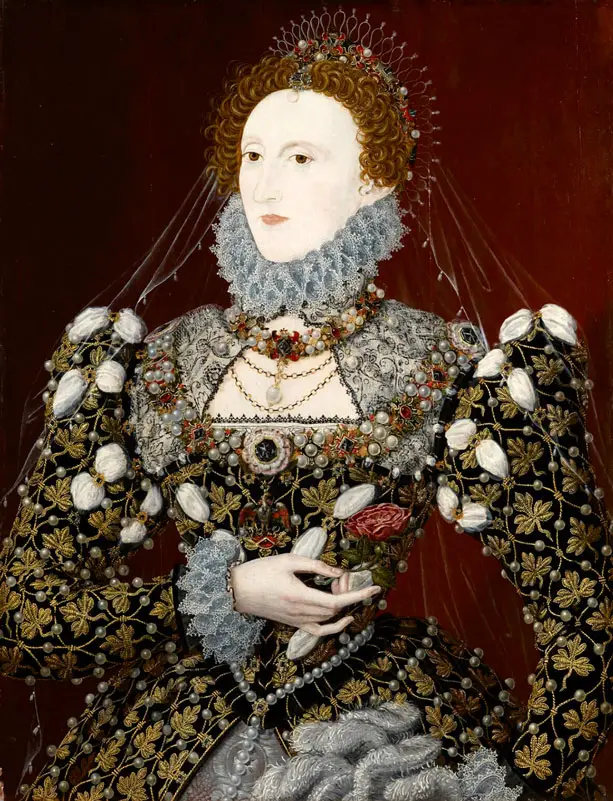
Following on from yesterday's look at the Pelican Portrait of Elizabeth I, today we have the Phoenix Portrait, which was also painted by Nicholas Hilliard and around the same time - or perhaps a year later - as the Pelican Portrait. Like the Pelican Portrait, it is rich with symbolism:
- The Phoenix – The portrait takes its name from the phoenix pendant which Elizabeth is wearing and the phoenix depicted all over her gown. The phoenix was used to symbolise sacrifice and rebirth, and the way that it rises from the ashes could speak of Elizabeth’s rise to power. The phoenix is also a symbol of Christ’s Resurrection and the promise of eternal life, and as only one phoenix lives at one time it may be a symbol of Elizabeth’s uniqueness. Another meaning of the phoenix is chastity, so it is another allusion to the queen’s purity and virginity.
- Dress – Elizabeth is wearing a stunning costume, a French gown decorated with pearls, embroidery and blackwork embroidery, as well as a spectacular ruff. It is a dress to impress, and the black and gold colours speak of Elizabeth’s wealth and status.
- Pearls – Again we have Elizbeth’s favourite jewellery and this time we have a strand around her waist, a girdle. Am I reading too much into this or could the positioning of those pearls, a symbol of purity and virginity, be speaking of her chastity?
- Red rose – The red rose is a symbol of love, beauty, secrecy, Christian martyrdom and the Virgin Mary, and the five petals of the rose were said to symbolise the five wounds of Christ. Could it be speaking of Elizabeth’s virginity and faith?